blade steel | 1095 carbon steel
HRC | 62
overall Length | ~185mm
blade length | 157mm
blade height at heel | 25mm
spine thickness at handle - mid - k tip | 2.9mm - 2.5mm - 1.1mm
handle material | ambrosia maple
ferrule material | micarta
weight: 62g
This paring knife is designed for boning, peeling, and delicate tip work. The edge at the heel is stout, gradually becoming finer as it progresses toward the tip. This makes the heel suitable for boning and cutting through joints, while the tip is fine and ideal for trimming silver skin or peeling an apple.
This knife’s mono-steel blade is made from 1095 carbon steel. It is similar in composition to the Hitachi White line of steels, with high levels of carbon, very few impurities, and no alloying elements. This steel performs at a high level while offering greater toughness than its Japanese counterparts. It takes very fine edges and is easy to sharpen while producing delicate, wispy burrs. With a symmetrical grind, it is suitable for both left- and right-handed users.
The takedown handle is made from locally harvested ambrosia maple. Due to its strong figure, irregular colouring, and the small holes left by ambrosia beetles, this wood is less sought after by larger manufacturers for its lack of uniformity. It is precisely these features that I find give it its beauty and individuality. Both burnt and natural-finish handles are sealed with multiple layers of natural tung oil.
Ferrules are constructed from either paper or linen micarta (layers of fibre bound together with phenolic resin). Micarta is an extremely tough material that becomes grippier when wet.
Each tang is stamped with the model, batch, and serial number, as well as CI25 (Cooking Implements / year of manufacture).
There are two six-sided handle designs available:
Each knife comes securely stored in its own wooden sheath and wrapped in a furoshiki.
All weights and lengths are approximations based on measurements from a single knife within each batch. While every effort is made to keep the knives as consistent as possible, small variations will occur due to the handmade nature of the work.
blade steel | 1095 carbon steel
HRC | 62
overall Length | ~185mm
blade length | 157mm
blade height at heel | 25mm
spine thickness at handle - mid - k tip | 2.9mm - 2.5mm - 1.1mm
handle material | ambrosia maple
ferrule material | micarta
weight: 62g
This paring knife is designed for boning, peeling, and delicate tip work. The edge at the heel is stout, gradually becoming finer as it progresses toward the tip. This makes the heel suitable for boning and cutting through joints, while the tip is fine and ideal for trimming silver skin or peeling an apple.
This knife’s mono-steel blade is made from 1095 carbon steel. It is similar in composition to the Hitachi White line of steels, with high levels of carbon, very few impurities, and no alloying elements. This steel performs at a high level while offering greater toughness than its Japanese counterparts. It takes very fine edges and is easy to sharpen while producing delicate, wispy burrs. With a symmetrical grind, it is suitable for both left- and right-handed users.
The takedown handle is made from locally harvested ambrosia maple. Due to its strong figure, irregular colouring, and the small holes left by ambrosia beetles, this wood is less sought after by larger manufacturers for its lack of uniformity. It is precisely these features that I find give it its beauty and individuality. Both burnt and natural-finish handles are sealed with multiple layers of natural tung oil.
Ferrules are constructed from either paper or linen micarta (layers of fibre bound together with phenolic resin). Micarta is an extremely tough material that becomes grippier when wet.
Each tang is stamped with the model, batch, and serial number, as well as CI25 (Cooking Implements / year of manufacture).
There are two six-sided handle designs available:
Each knife comes securely stored in its own wooden sheath and wrapped in a furoshiki.
All weights and lengths are approximations based on measurements from a single knife within each batch. While every effort is made to keep the knives as consistent as possible, small variations will occur due to the handmade nature of the work.


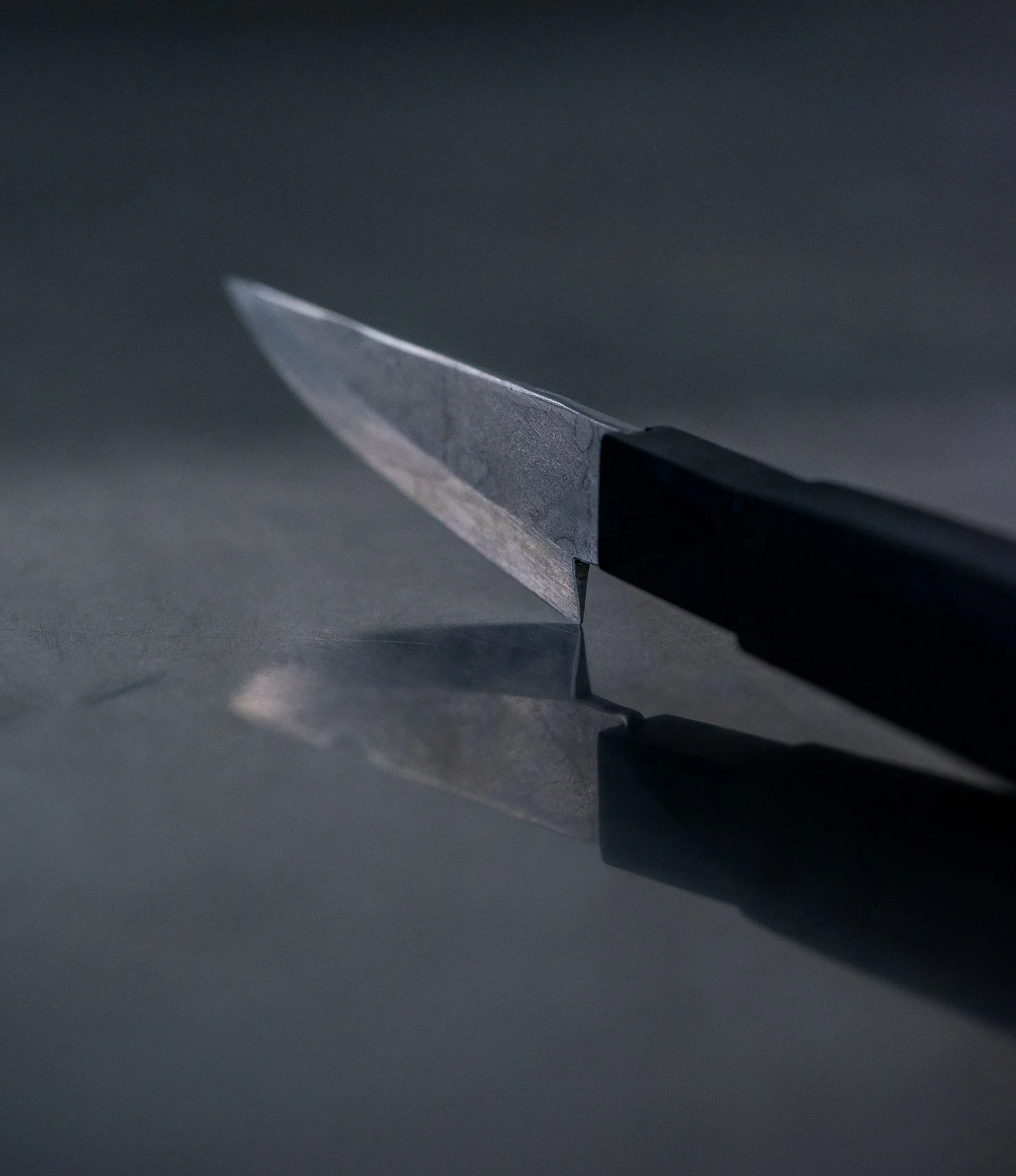 Image 1 of 21
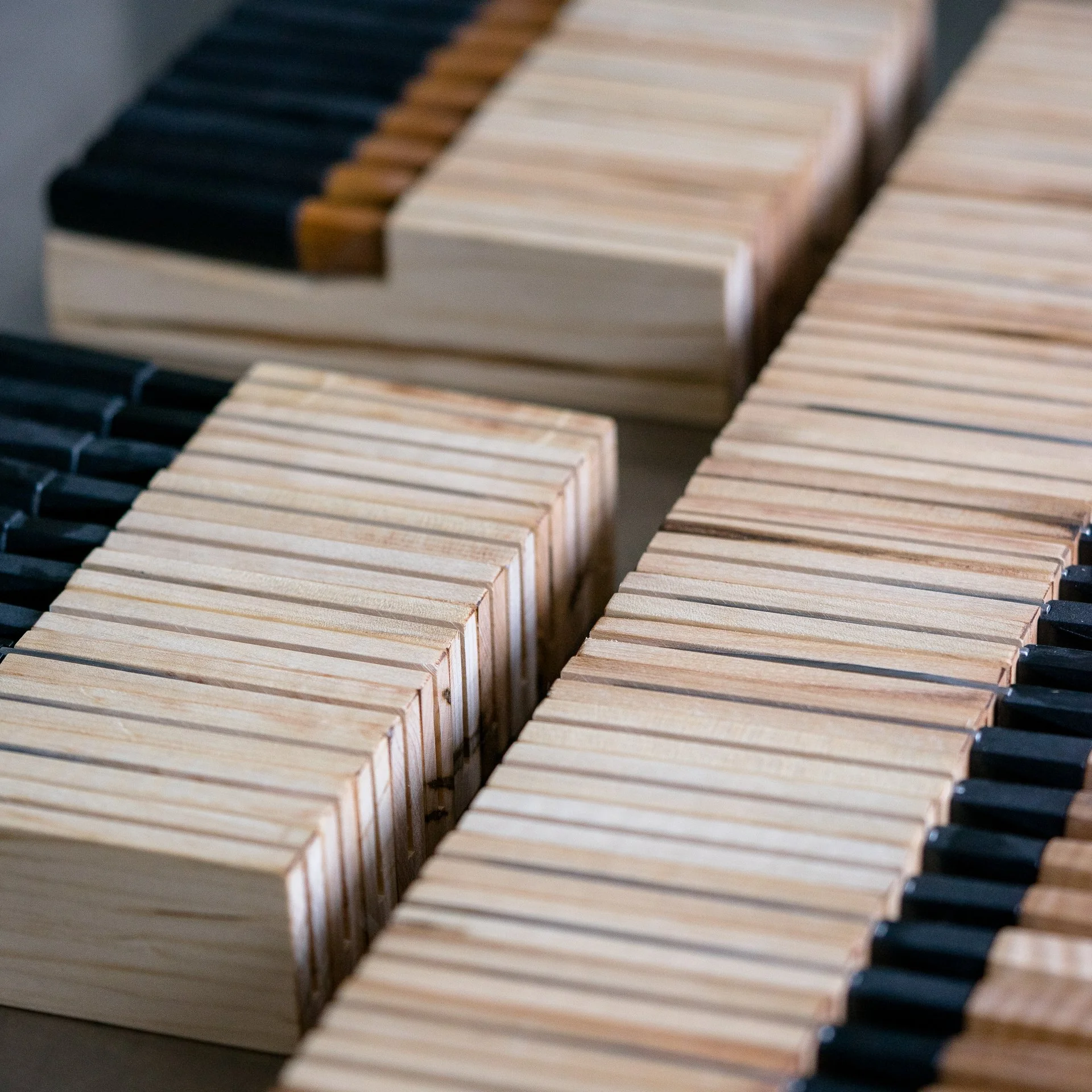 Image 2 of 21
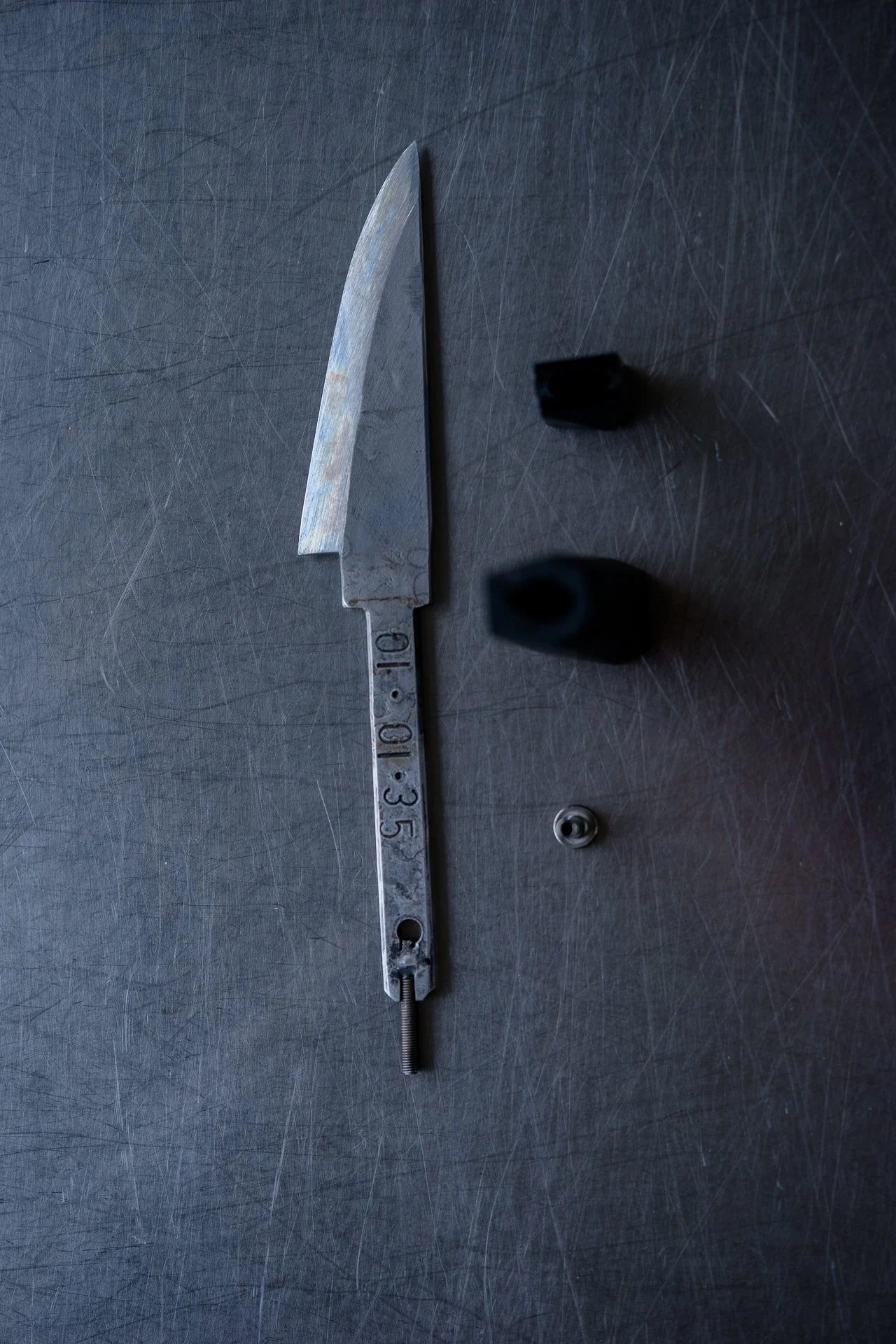 Image 3 of 21
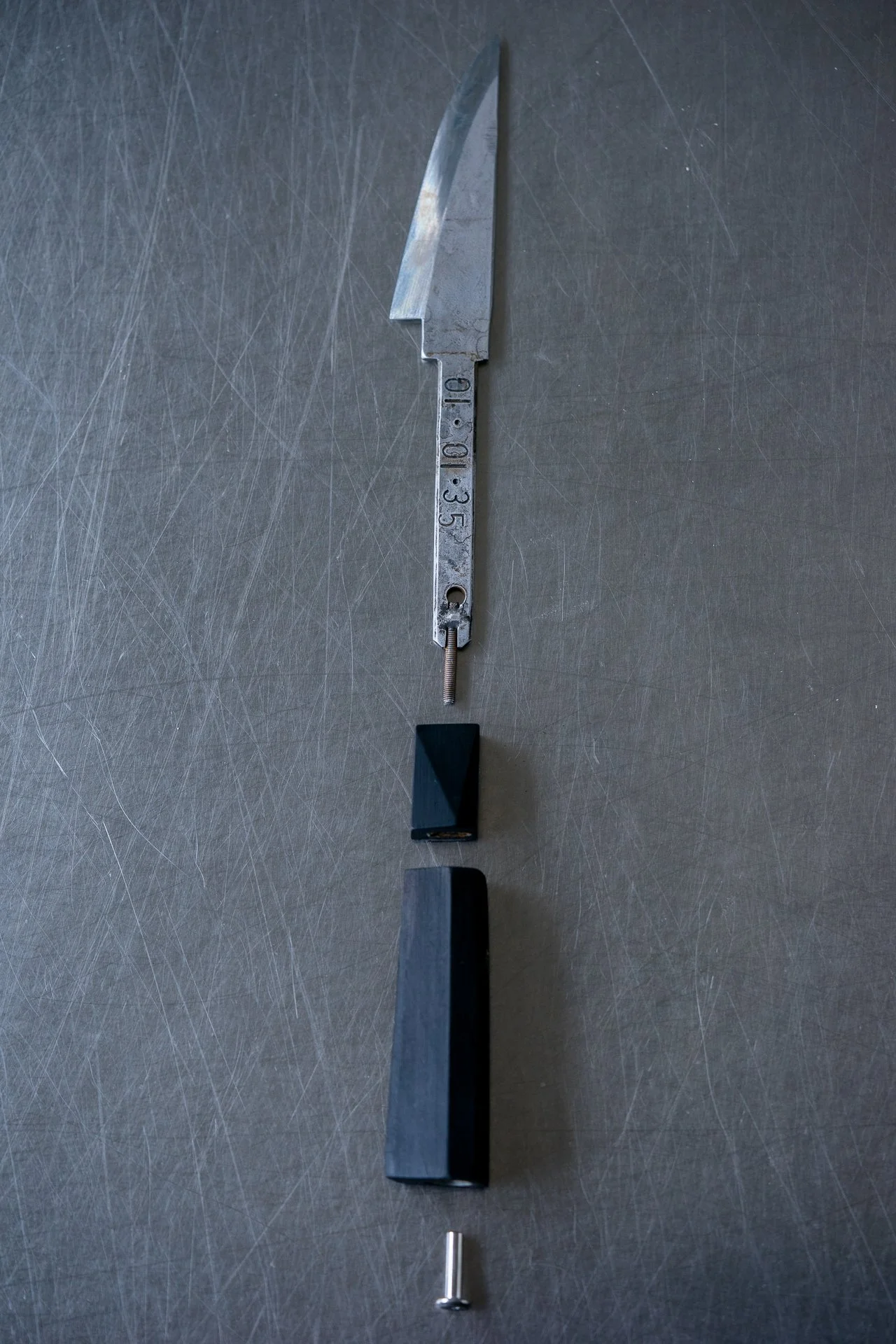 Image 4 of 21
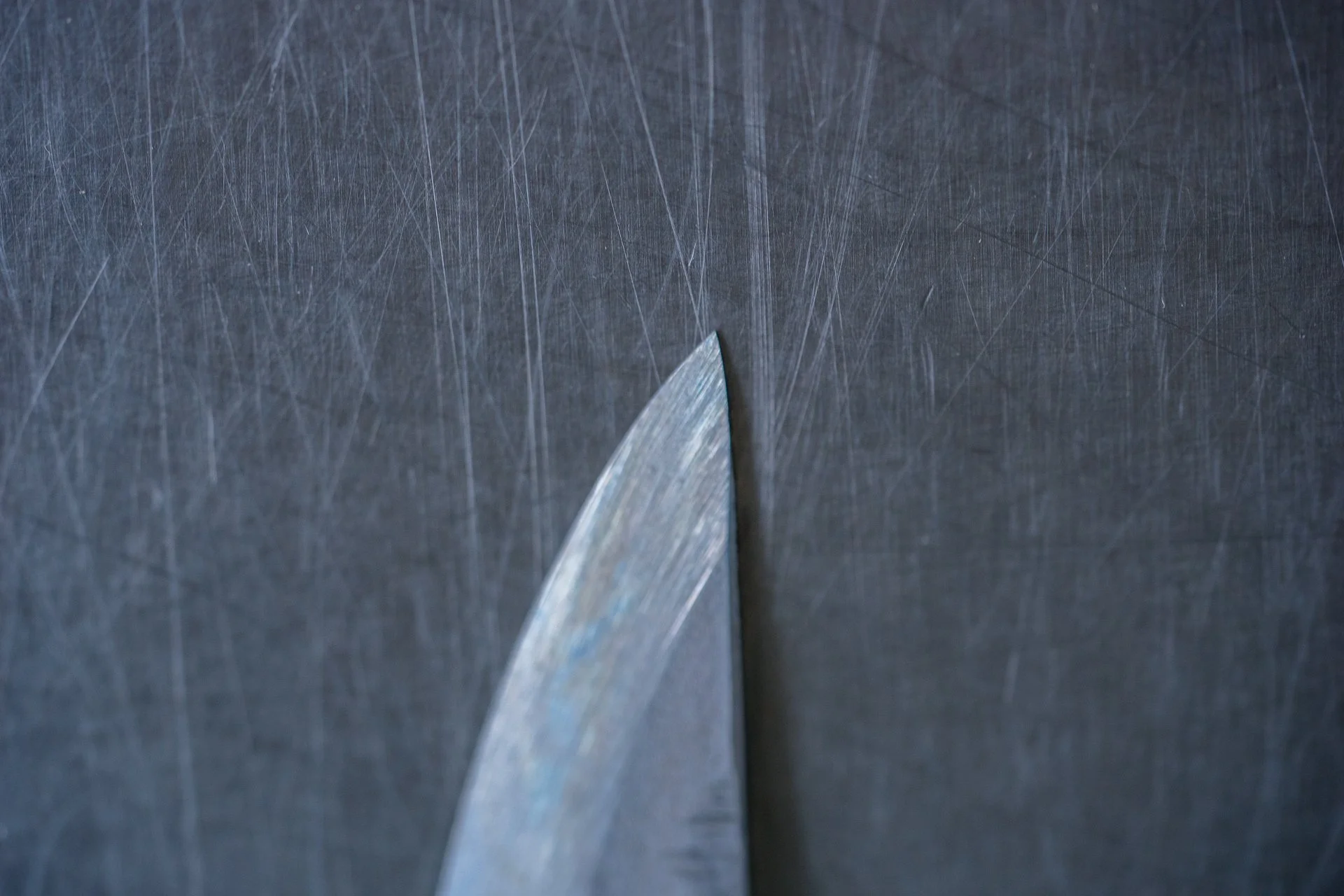 Image 5 of 21
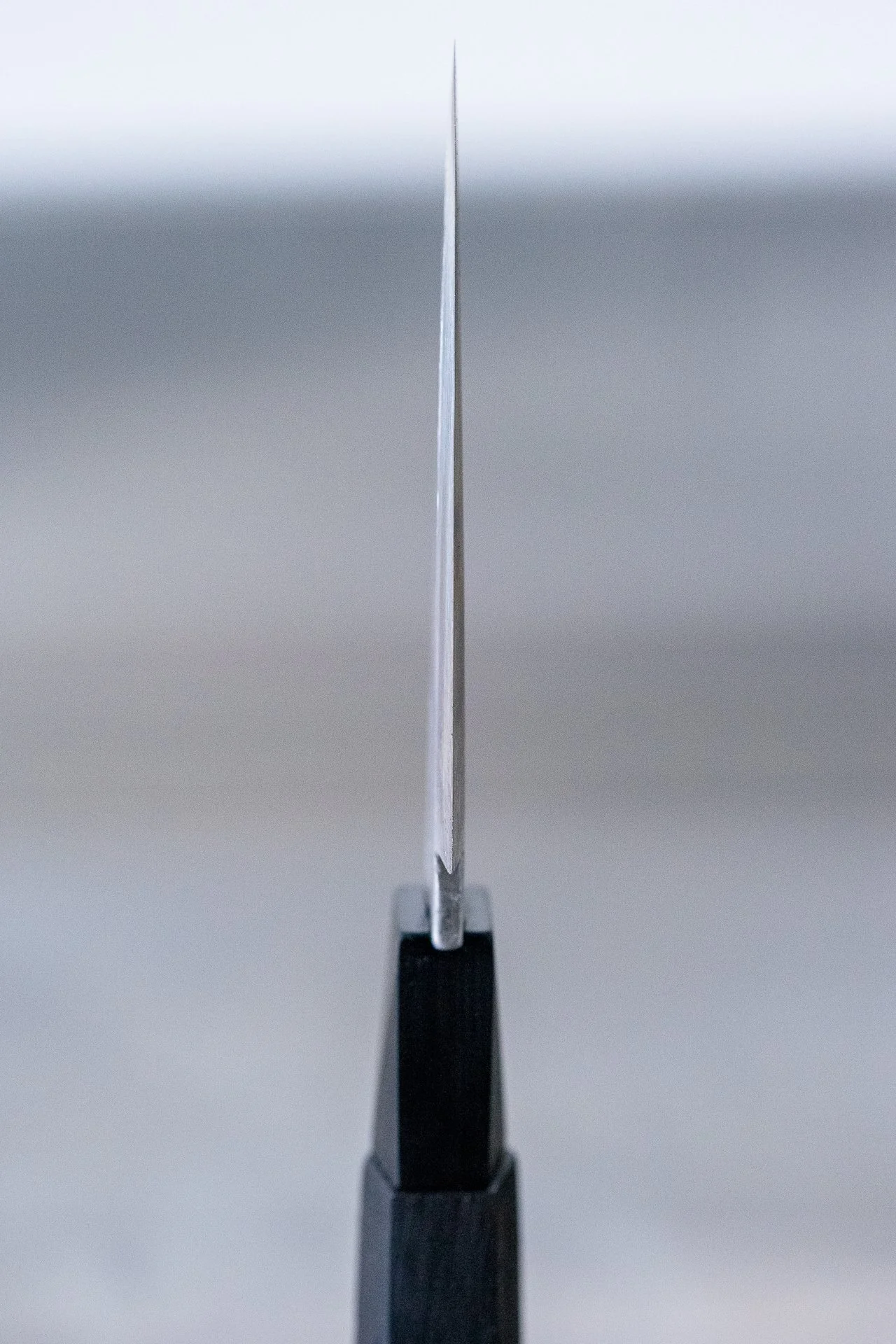 Image 6 of 21
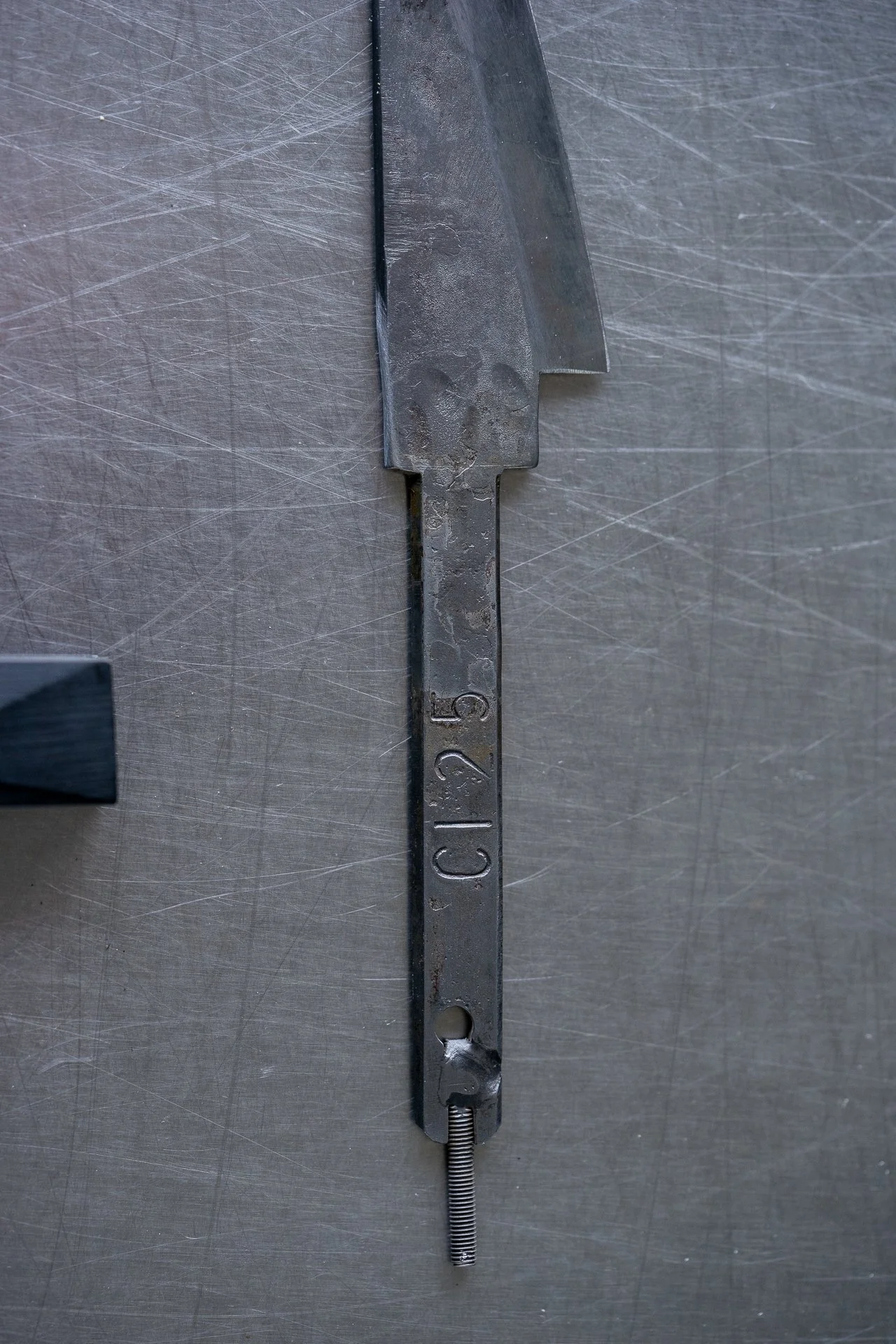 Image 7 of 21
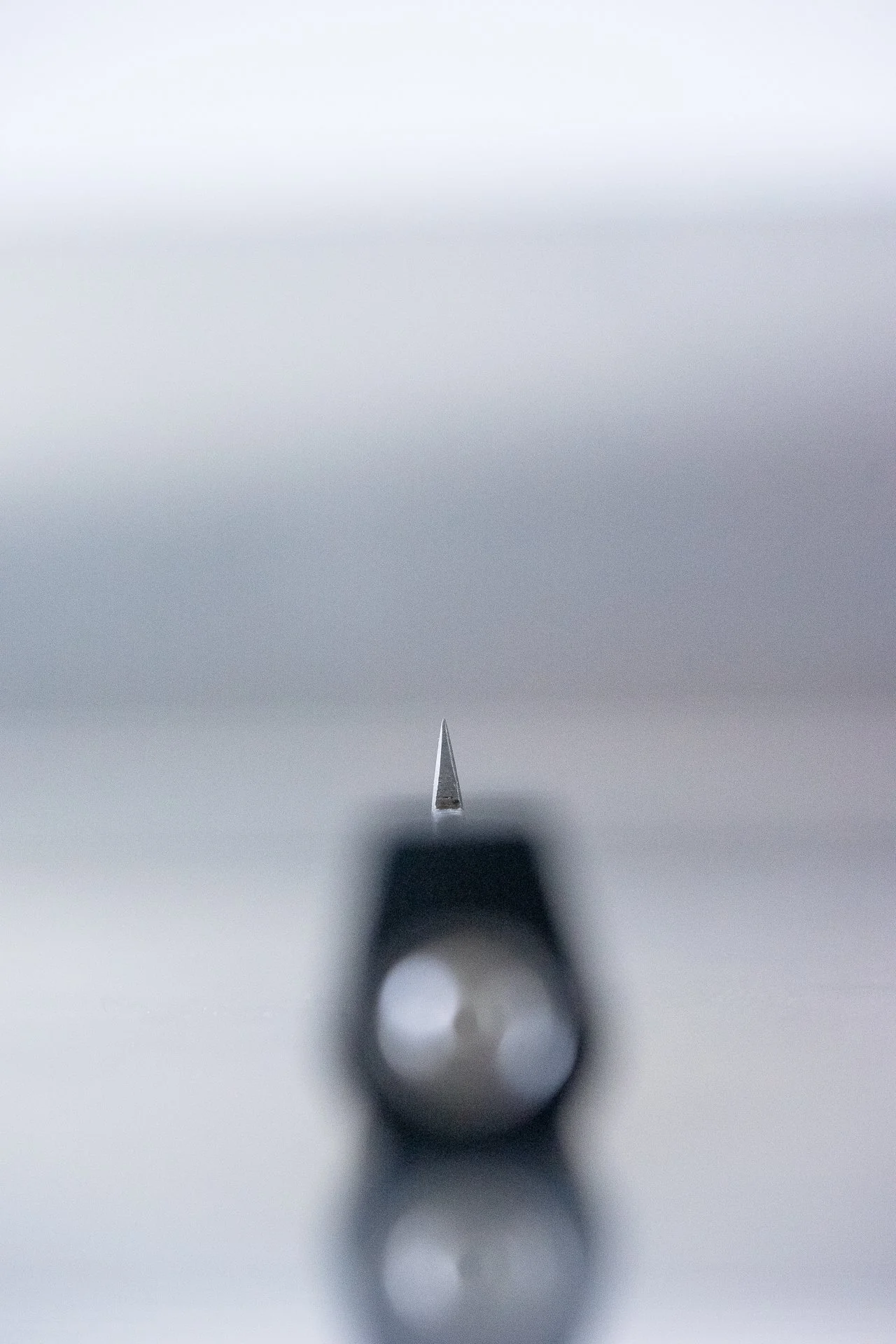 Image 8 of 21
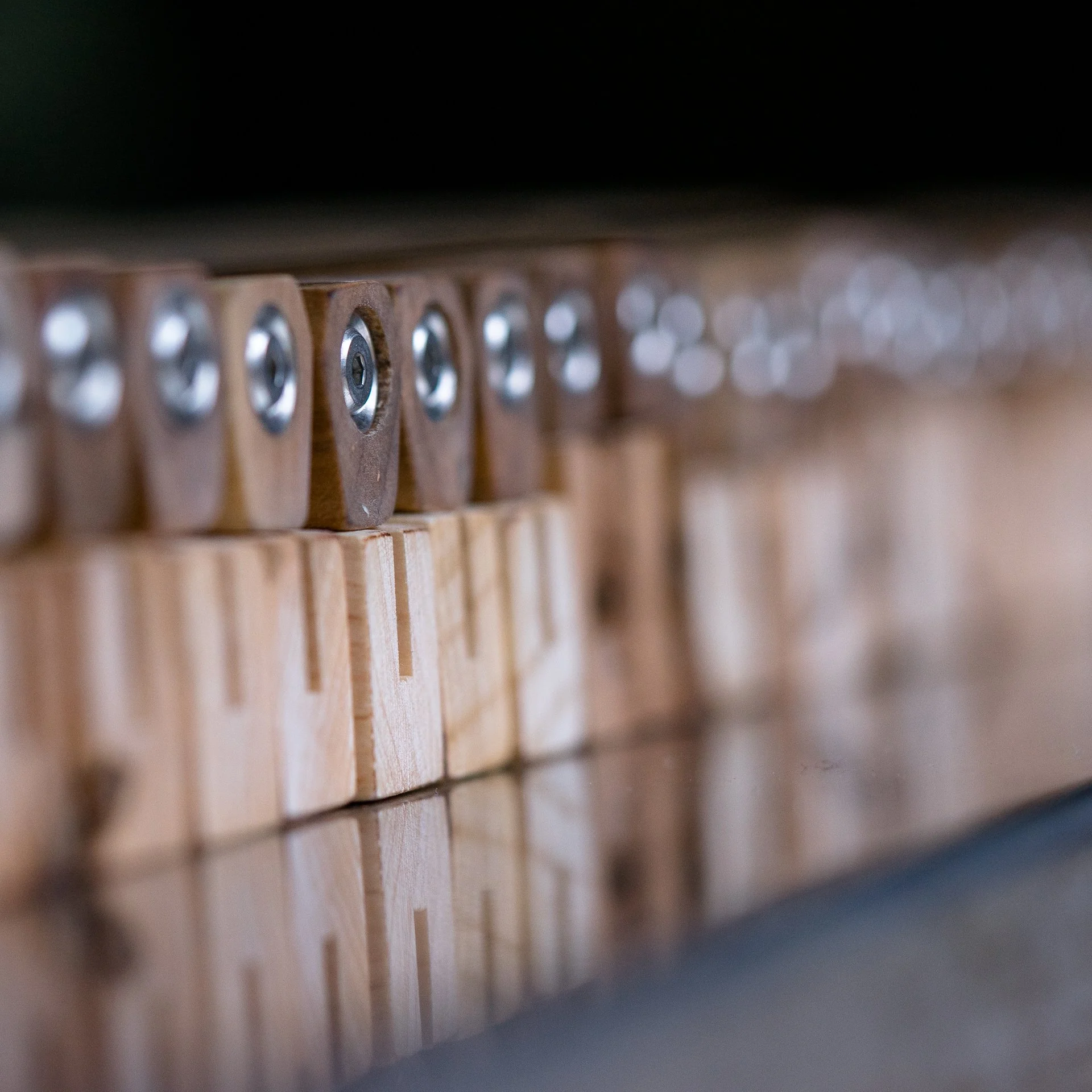 Image 9 of 21
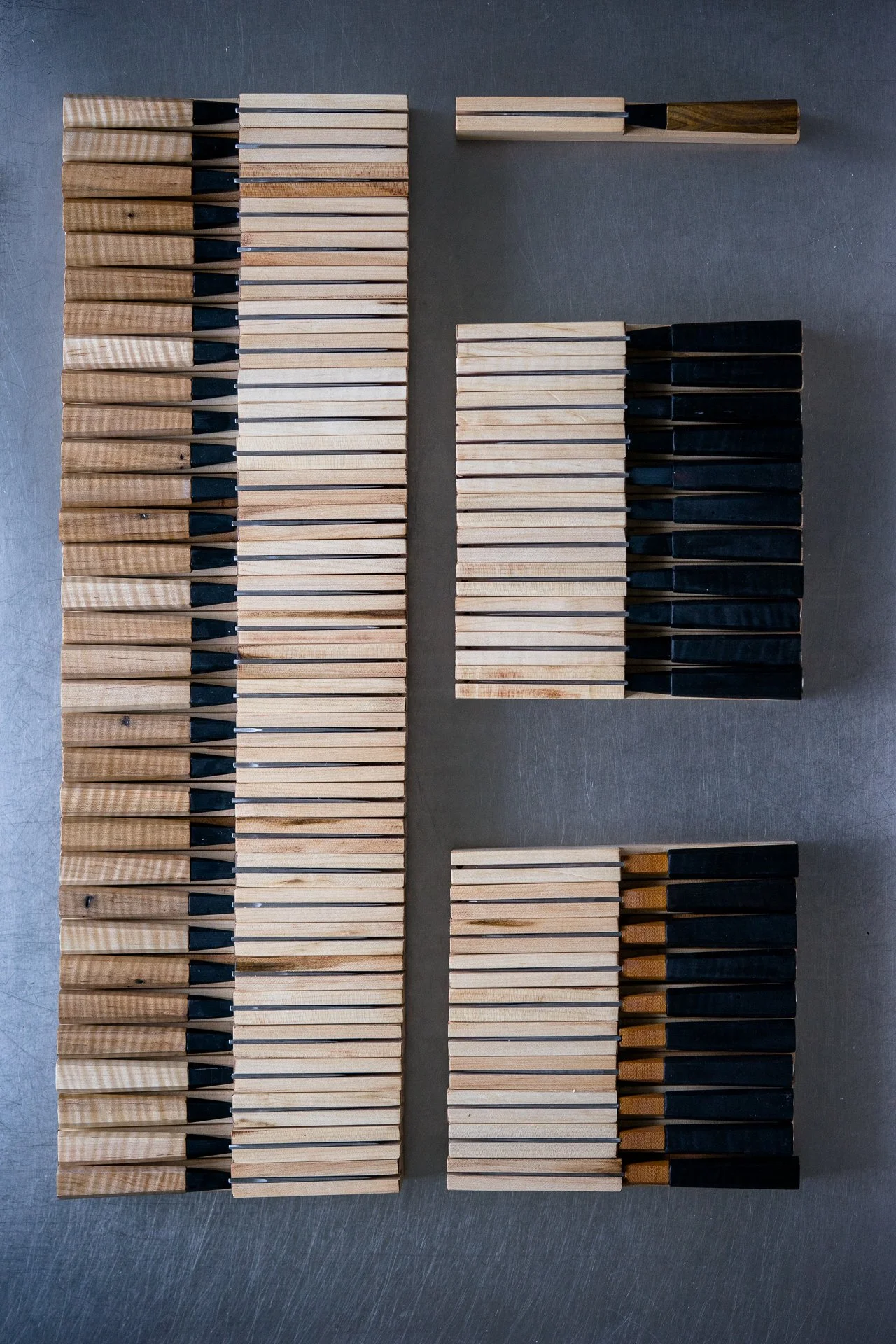 Image 10 of 21
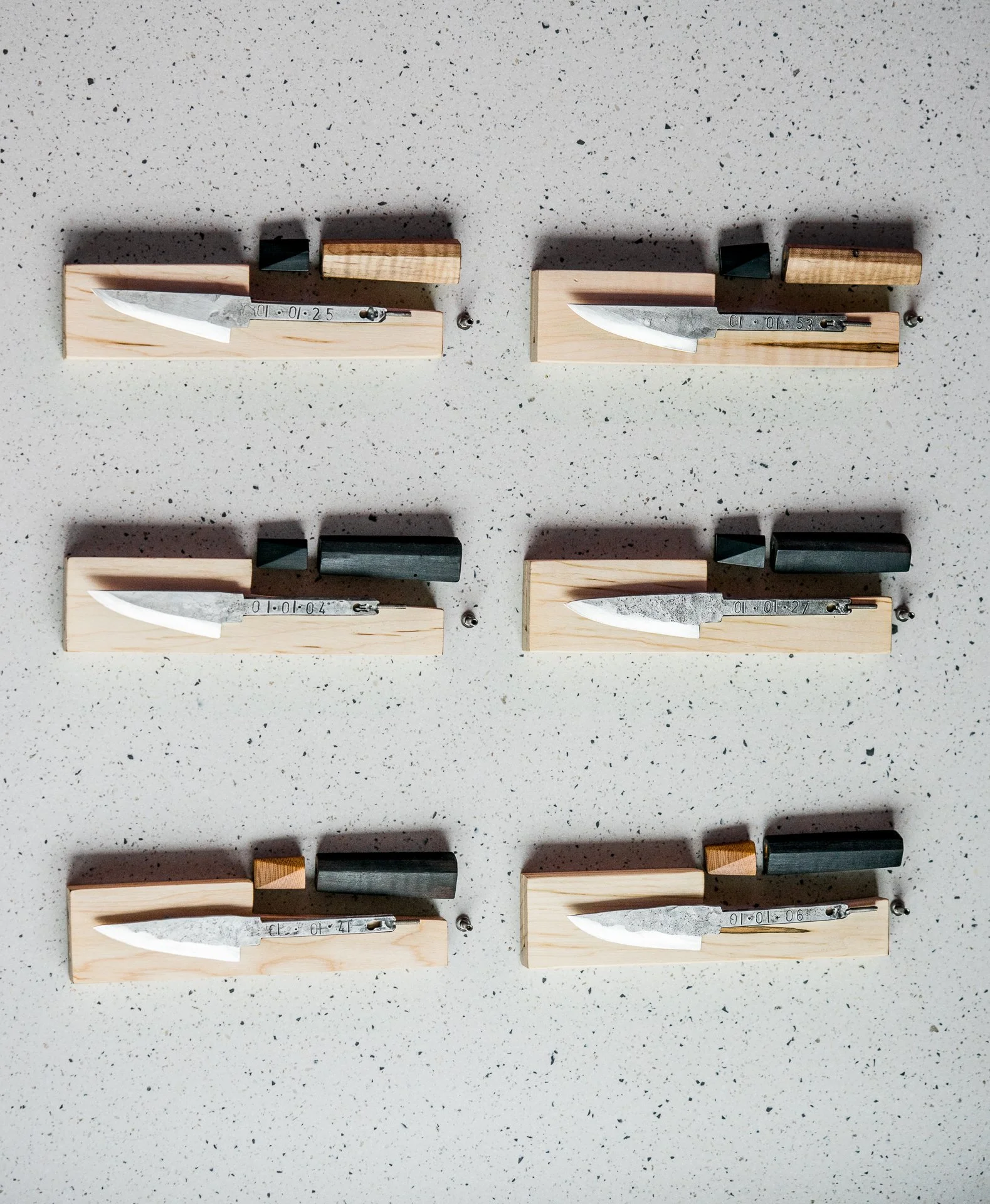 Image 11 of 21
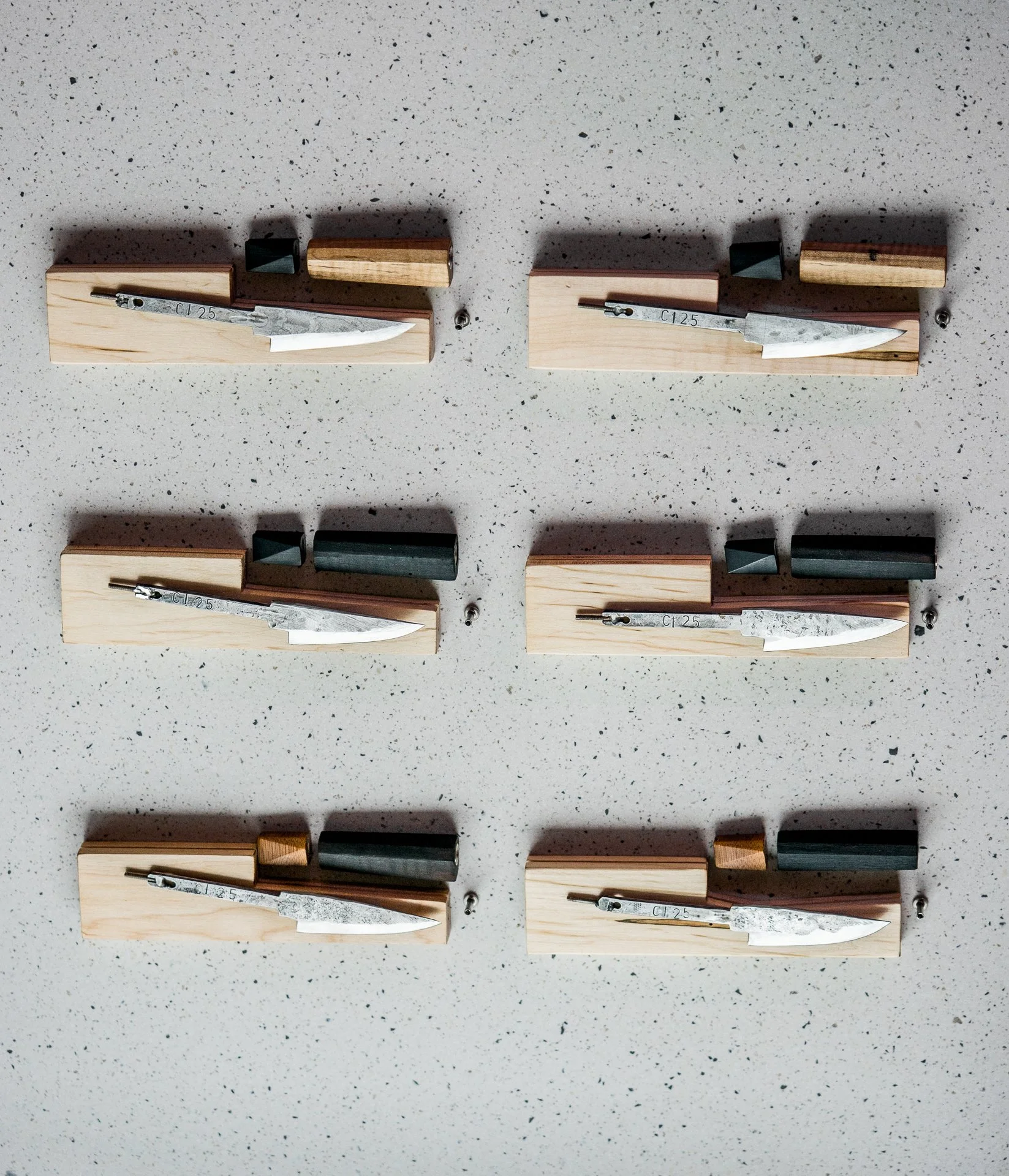 Image 12 of 21
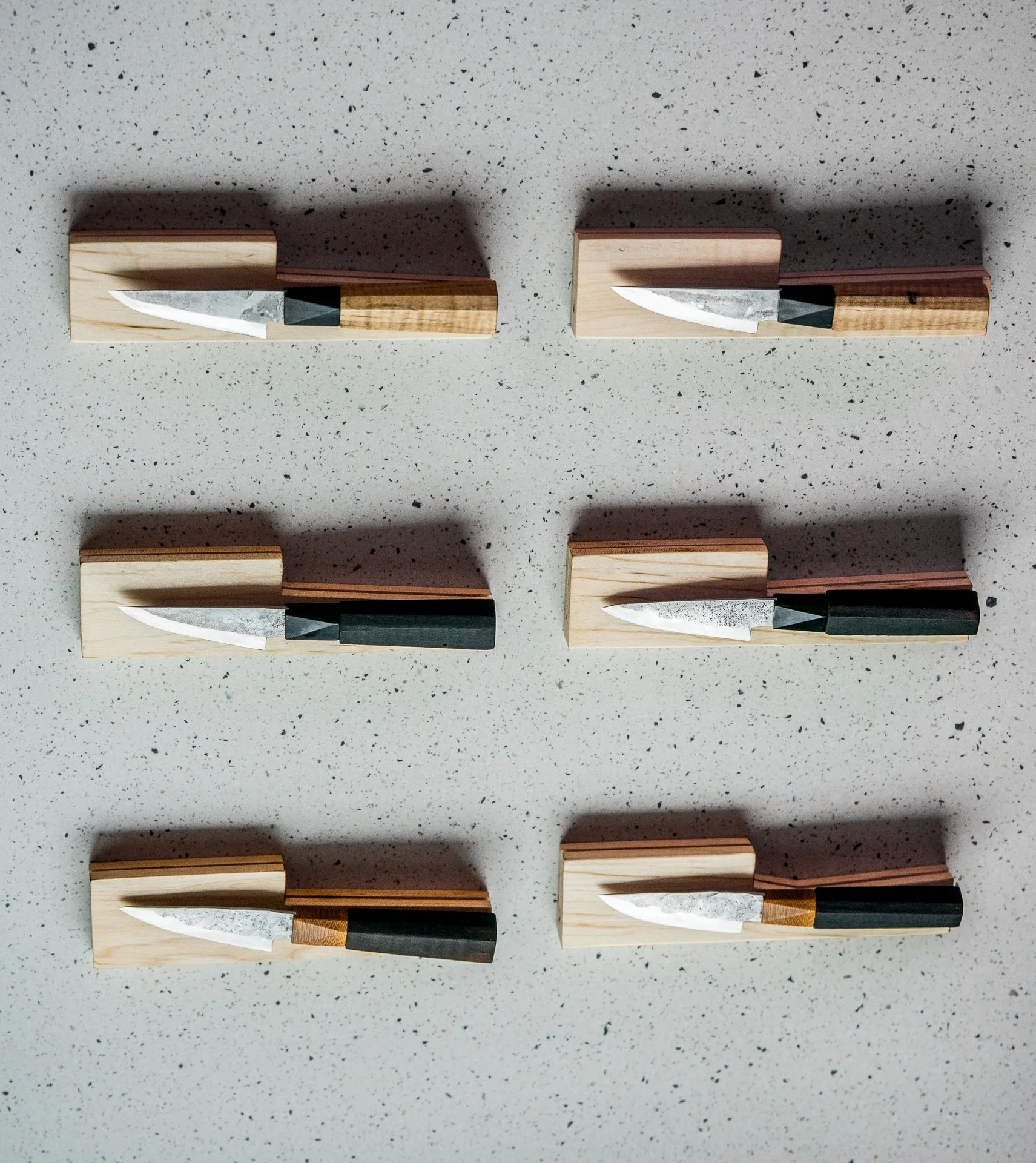 Image 13 of 21
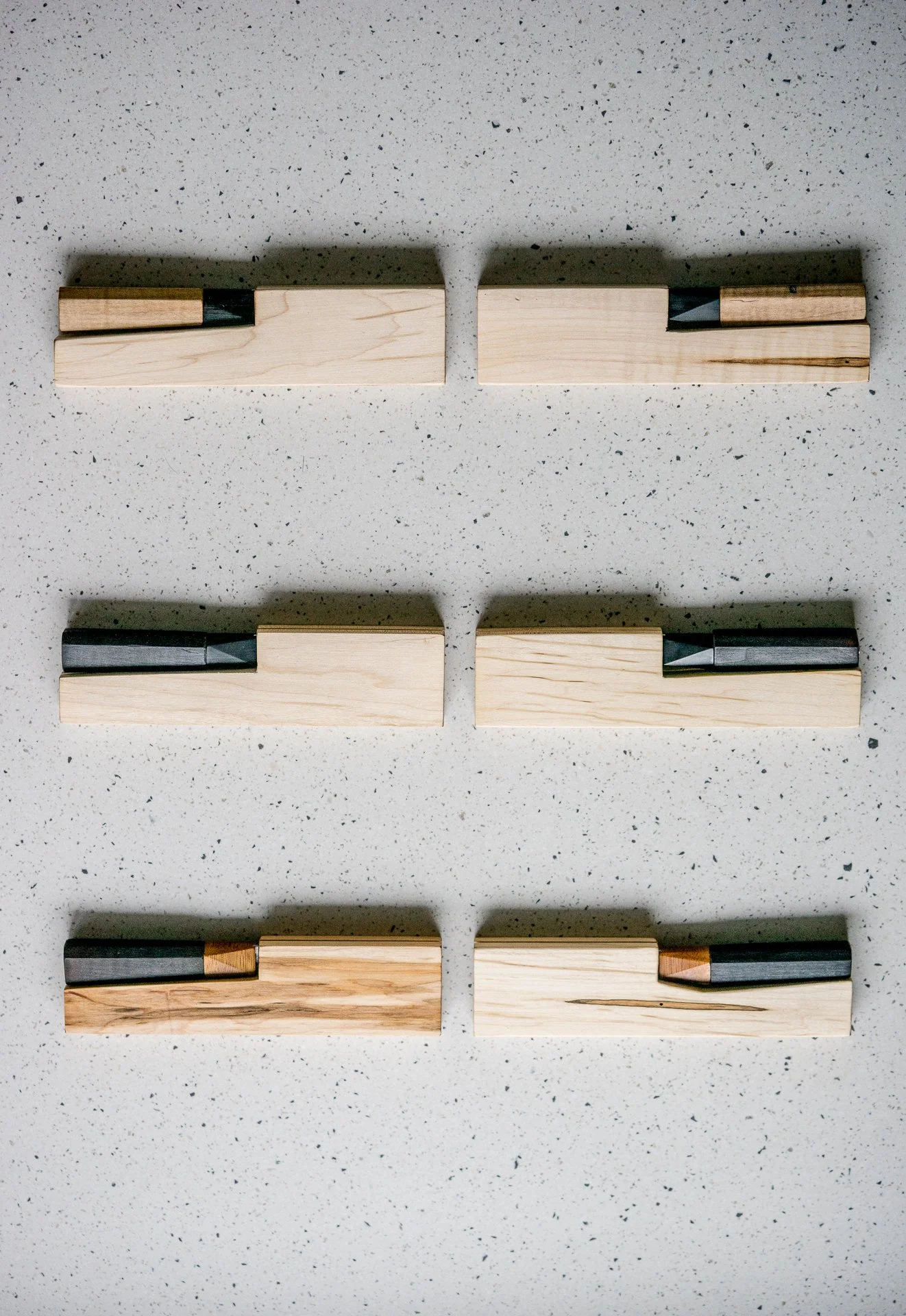 Image 14 of 21
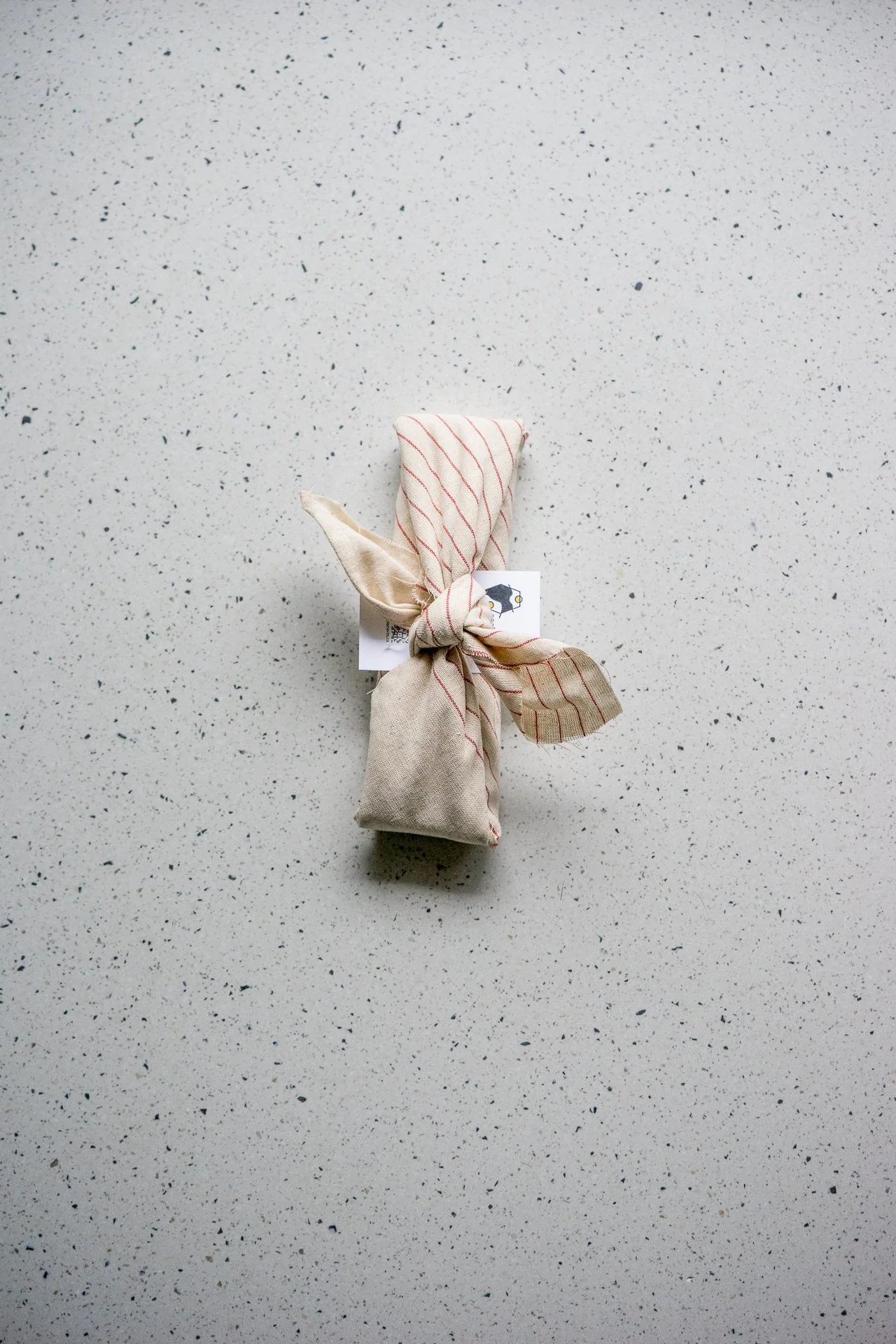 Image 15 of 21
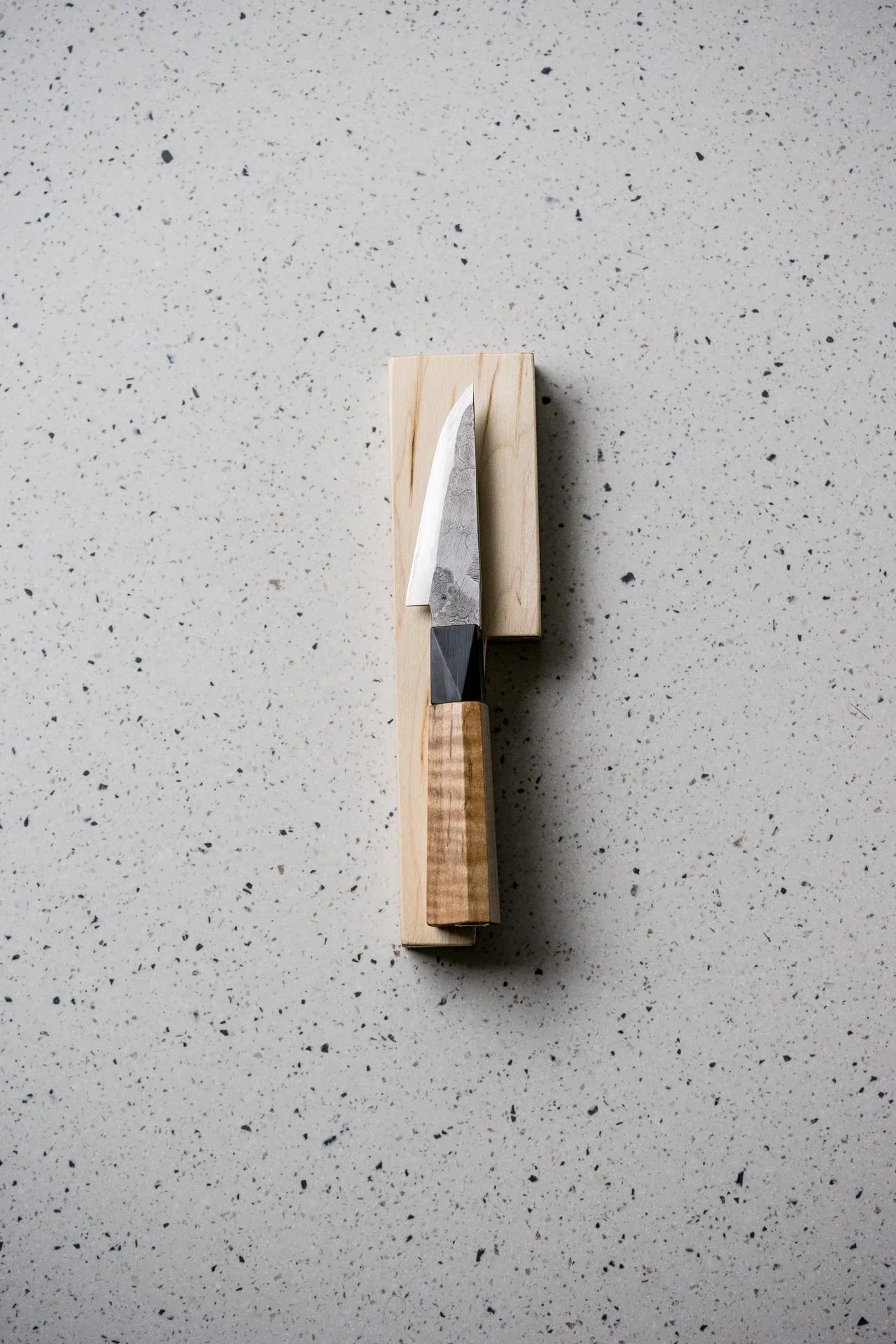 Image 16 of 21
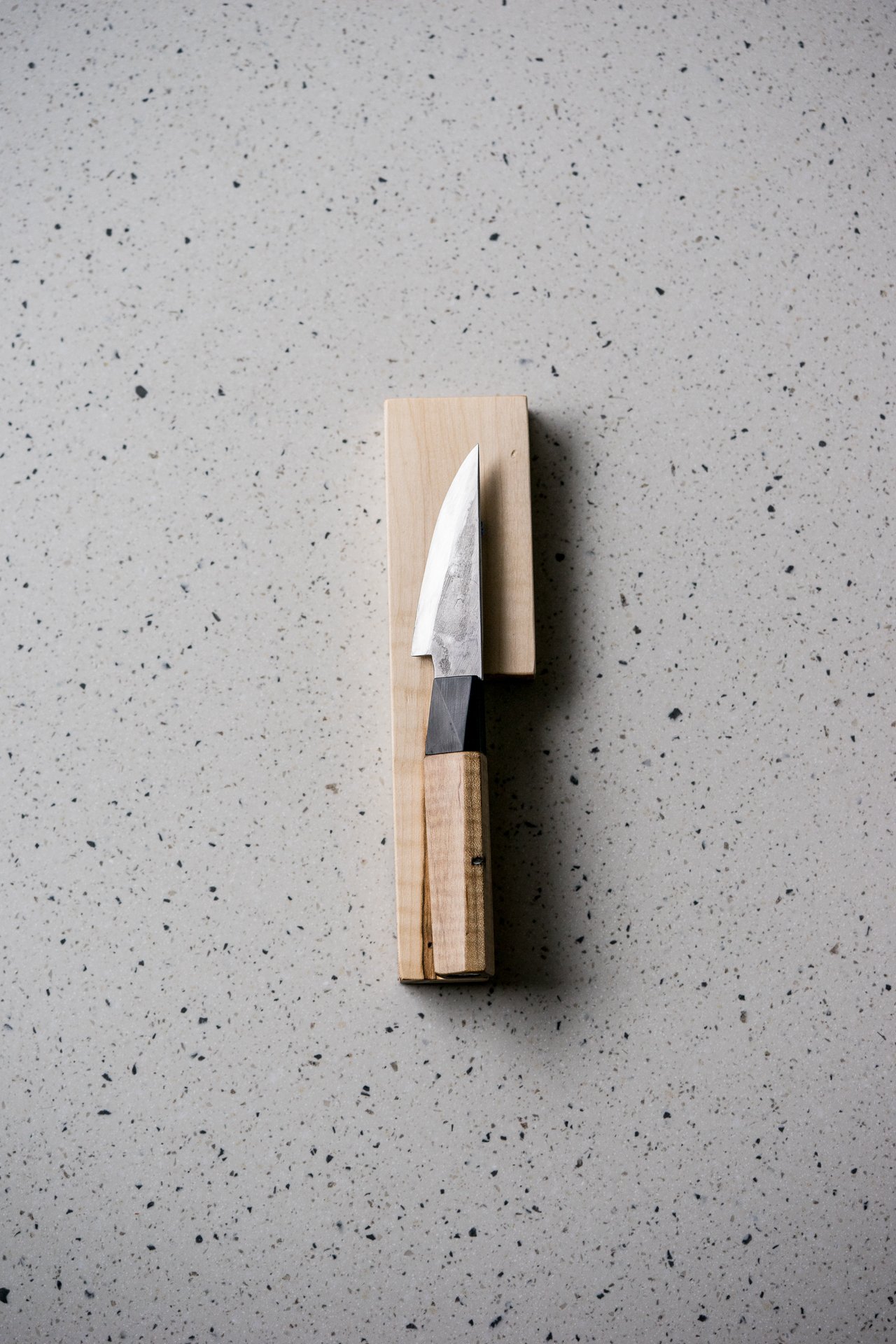 Image 17 of 21
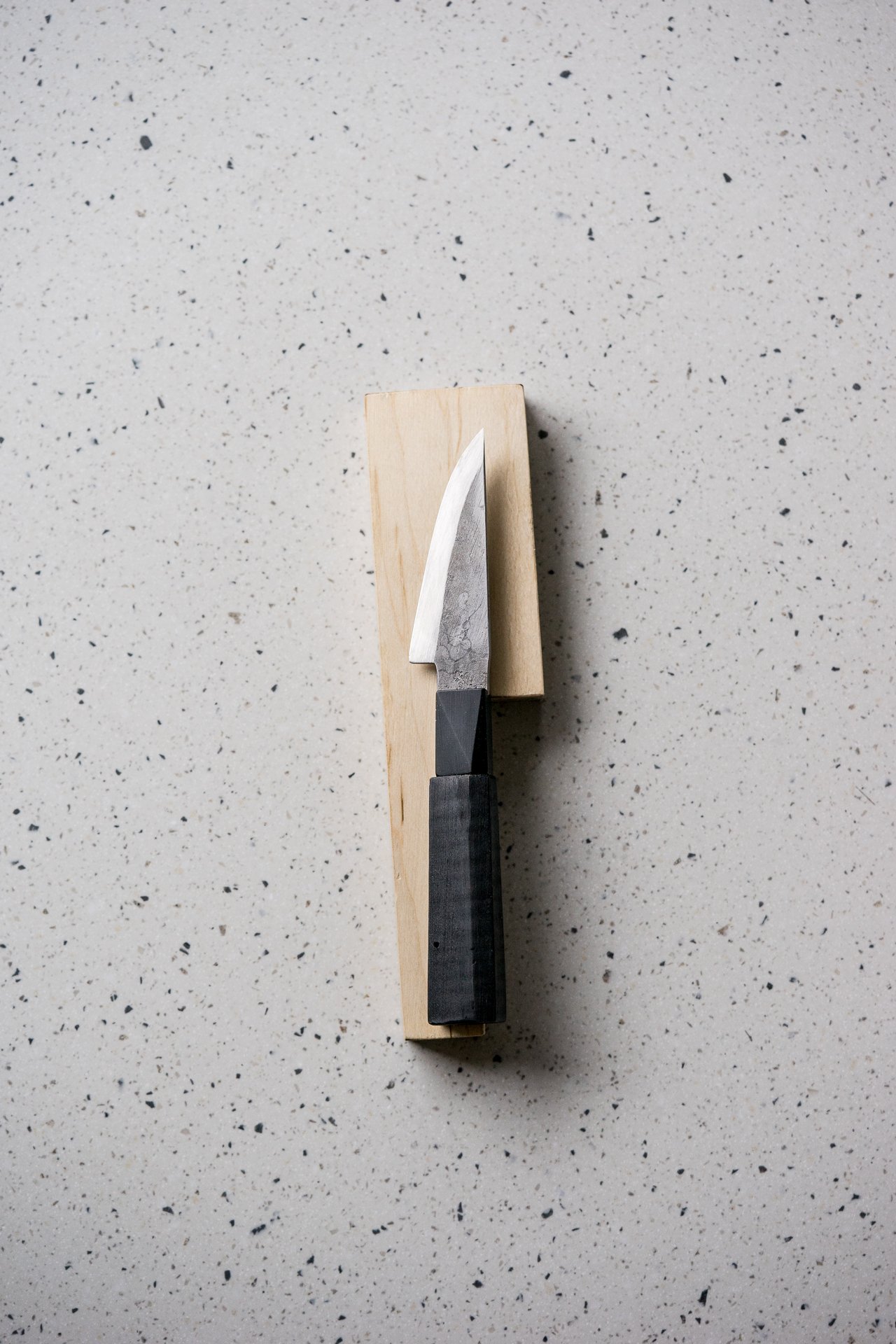 Image 18 of 21
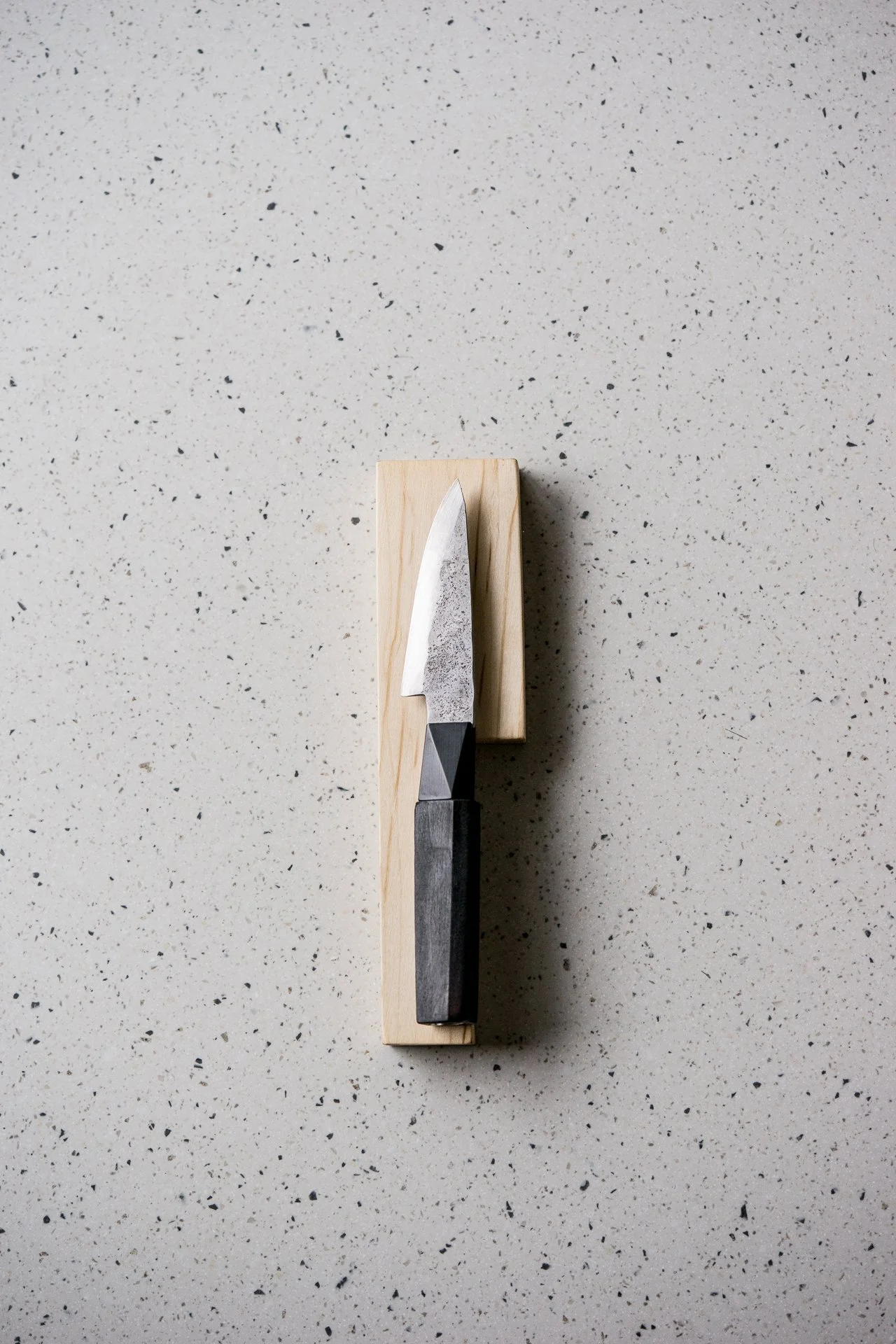 Image 19 of 21
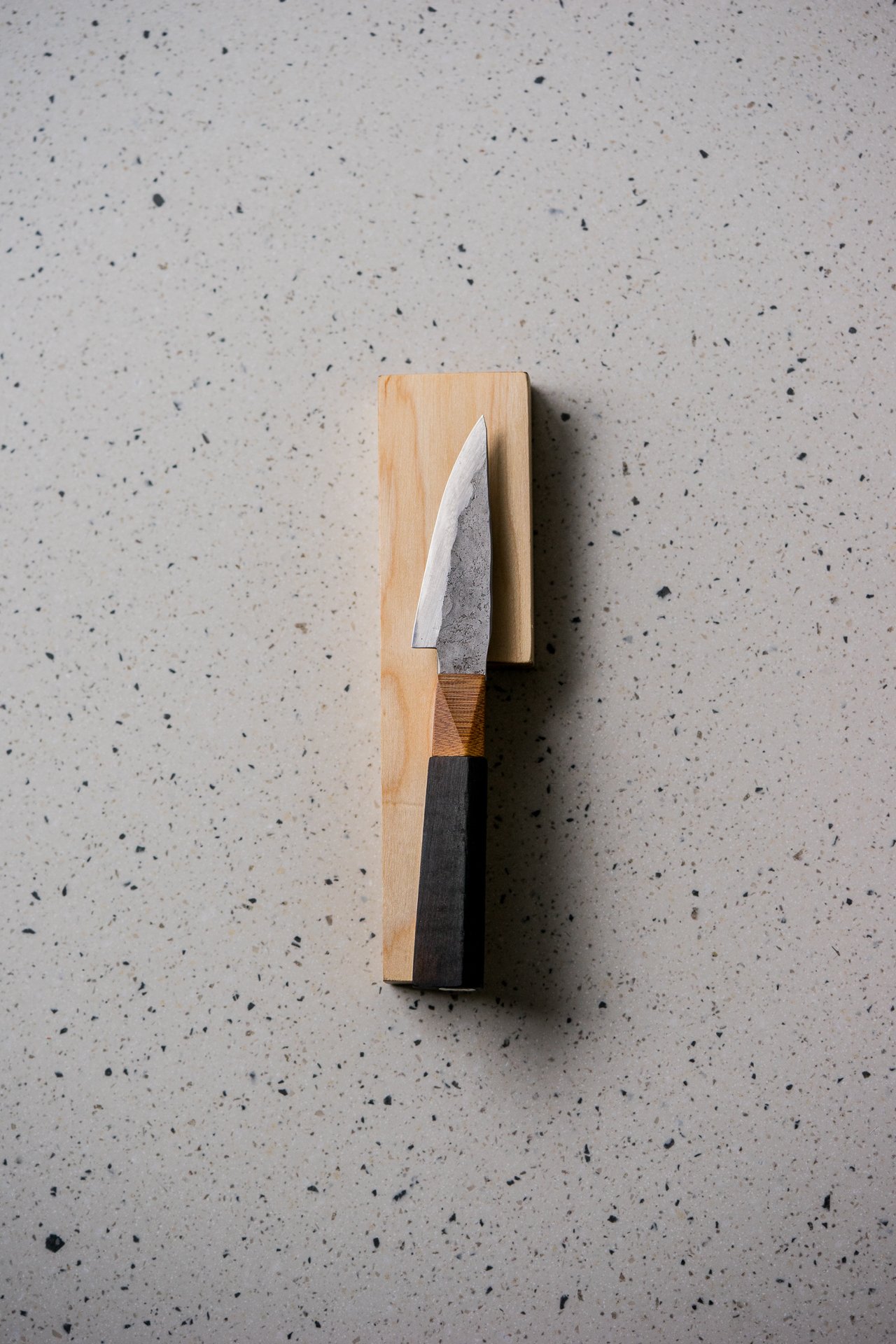 Image 20 of 21
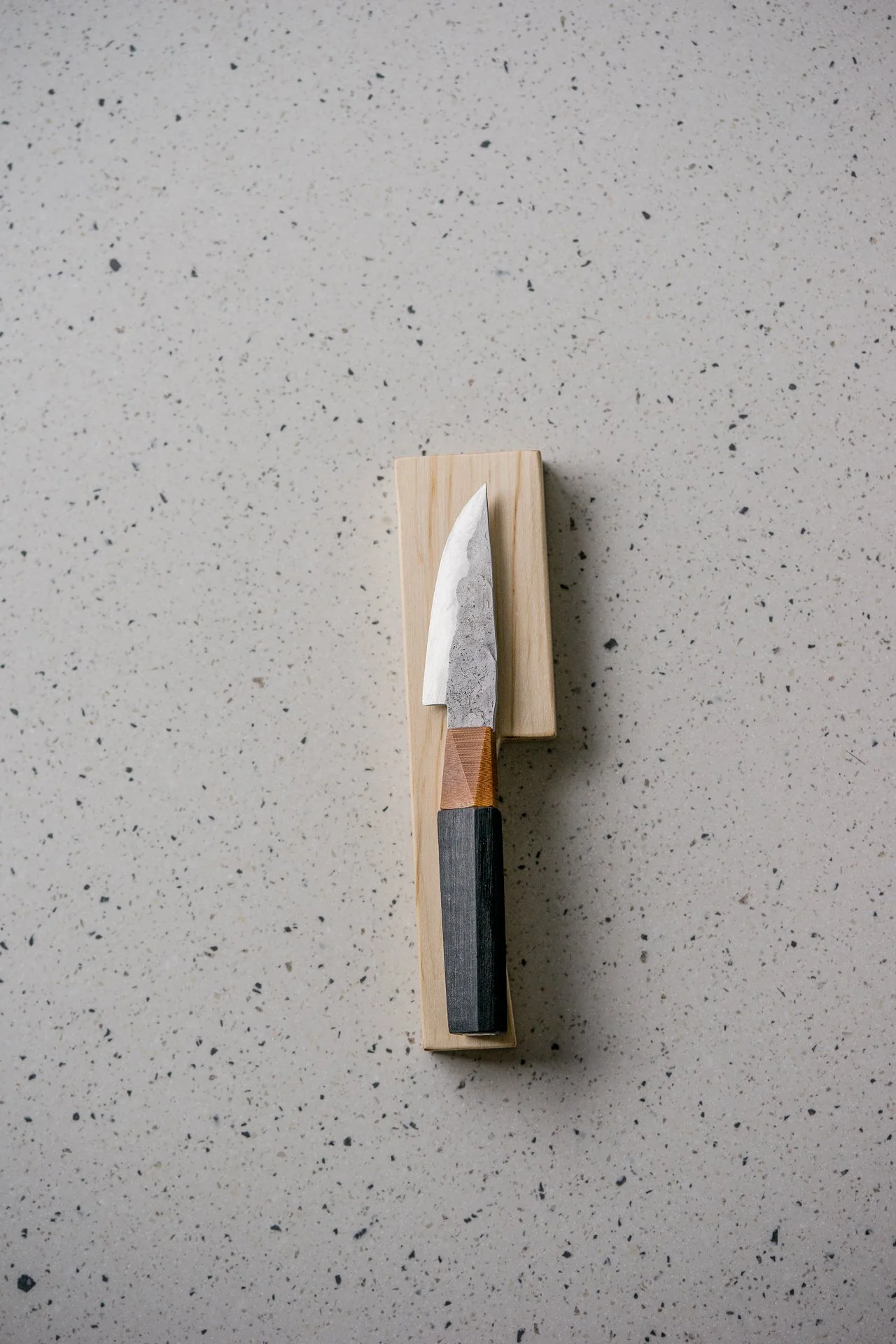 Image 21 of 21