FAQ
-
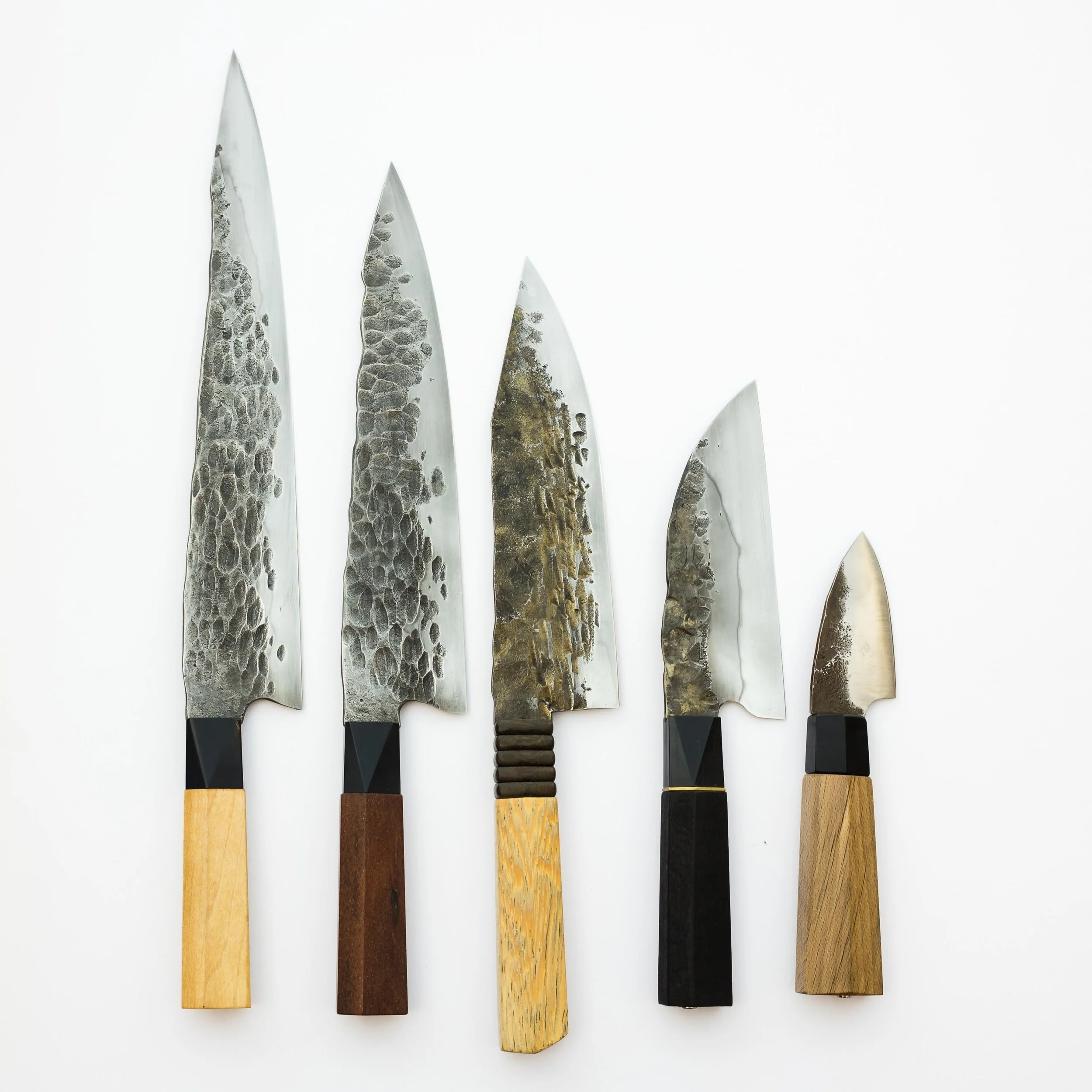
The knives I make are crafted from carbon steel. This steel will develop a rich, dark patina over time if cared for properly; however, it may rust if left wet or with food on it.
For best results, wipe the blade clean after cutting with a damp cloth or sponge and dry it immediately with a towel. Never run the knife through a dishwasher or leave it in the sink to soak.
-
To maintain an edge for as long as possible, I recommend a Larch Wood cutting board (made in Canada and the best in the world). If this is outside your budget, HDPE boards are also sufficient. Avoid bamboo, glass, or pressed fibreboard cutting boards.
-
Store the knife in the block it came in, on a wall magnet, or in a drawer with a protective sheath or in dedicated slots. Never throw a knife loose in a drawer, as this will lead to severe chipping and edge damage.
-
To maintain a long-lasting cutting edge, I recommend stropping on leather impregnated with a fine diamond emulsion or another stropping compound. Alternatively, a ceramic honing rod can be used.
I prefer a strop. In my experience, it is easier to use and provides longer-lasting results. Never use a honing rod made of steel or impregnated with diamonds, as these can damage the edge.
-
All of the wood used at Cooking Implements is finished with food-grade tung oil. While this durable finish is among the toughest food-safe options available, it will still benefit from occasional maintenance to keep your piece looking its best and to extend its lifespan.
To care for your wood product:
Avoid soaking it in water, especially with soaps or other chemicals.
Wash gently with a soft cloth or non-abrasive scrubber using mild soapy water.
Rinse thoroughly and dry immediately.
Do not leave it sitting in standing water on countertops or in sink-side drying racks.
With proper care, your wood implement will remain beautiful and functional for many years.
To restore its luster over time, apply an oil-based, food-grade wood finish according to the manufacturer’s instructions. Treating the wood once or twice a year is usually enough to keep it looking its best.
-
All of the wood used in our products is either locally harvested or reclaimed. While many makers rely on exotic woods sourced from distant regions—often without considering the environmental impact—we choose a more responsible approach. The harvesting of exotic woods can contribute to habitat destruction, soil erosion, and significant carbon emissions from long-distance transport.
On rare occasions, I work with exotic woods only when they come from salvaged or reclaimed sources. This was the case with the lignum vitae, mahogany, and beech used in some of my pieces.
The lignum vitae came from a friend who purchased a 100-year-old stamp company that had preserved nearly all of its original equipment and materials. Among the collection were two lignum vitae chopping blocks that were no longer needed, and I was fortunate enough to give them new life.
The mahogany and beech were reclaimed from their former role as dunnage used to support heavy steel pipes during rail transport. These woods needed to be exceptionally strong to bear such weight. Though far from furniture-grade and marked with signs of age, disease, and past insect activity, I find their imperfections add a unique and meaningful character to each piece.
Many of my pieces are crafted from locally harvested woods. While I understand the appeal and beauty of exotic species, I’ve come to truly appreciate the subtle variations and rich character found in the woods native to the region of Québec, where I live. These locally available materials offer a beauty that feels authentic to the land, and working with them allows me to create pieces that are both sustainable and deeply connected to their place of origin.